Foot pain has a way of sneaking into every part of your day. You feel it on the walk from the car park, on the school run, at the gym, and sometimes on the first few steps out of bed. If you have started looking into relief options, you have probably come across dozens of inserts promising to fix the problem overnight. The reality is a little more interesting. Not every insert is an orthotic, and not every orthotic suits every foot. Understanding the different types of orthotics is the first step in choosing a device that actually supports the way you move.
This guide walks through the main categories we prescribe at The Heel Centre, who each type tends to suit, and the questions worth asking before you commit to a pair.
What an orthotic is actually doing inside your shoe
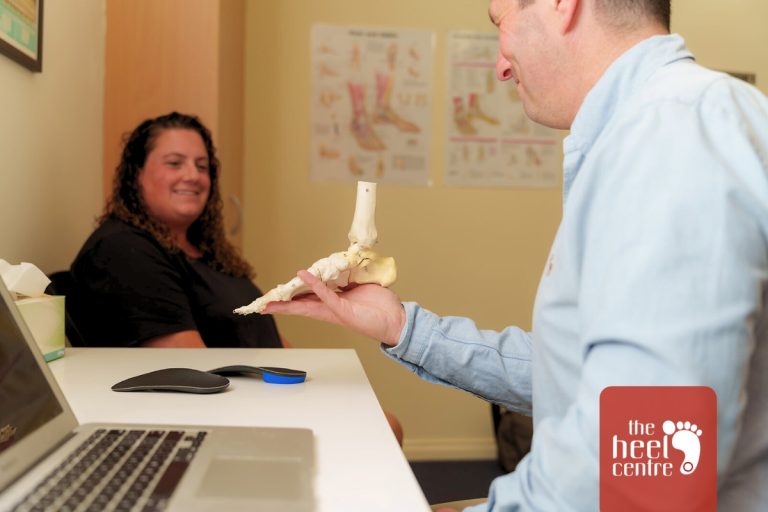
An orthotic is a medical device that sits inside your shoe and influences the way forces travel through your foot, ankle, knee, hip, and lower back. Some devices prop up a collapsed arch. Others cushion a bony heel. A well-prescribed orthotic redistributes load away from the tissue that is struggling, giving it room to settle and recover.
This is also why a chemist insert and a prescribed orthotic are not the same thing, even when they look similar from the top. The shape, the density of the materials, and the way the device is posted underneath all change the story. Before we talk about orthotic therapy options, it helps to know that orthotics generally fall into two camps based on how they are made: custom and prefabricated.
Custom orthotics vs prefabricated orthotics
Custom orthotics
Custom orthotics are built for one person and one set of feet. At The Heel Centre, we capture the shape of your foot using 3D laser scanning with our Delcam iQube scanner, combine that with findings from your biomechanical assessment, and send the design to the lab. The finished device matches your arch contour, heel width, and the specific posting your foot needs.
They tend to suit people dealing with stubborn conditions such as plantar fasciitis, posterior tibial tendon dysfunction, bunions that are changing how you load the forefoot, or foot-related knee, hip, and lower back pain. People with high arches, very flat arches, or significant leg length differences often do better in a custom device because the prescription can be fine-tuned.
Prefabricated orthotics
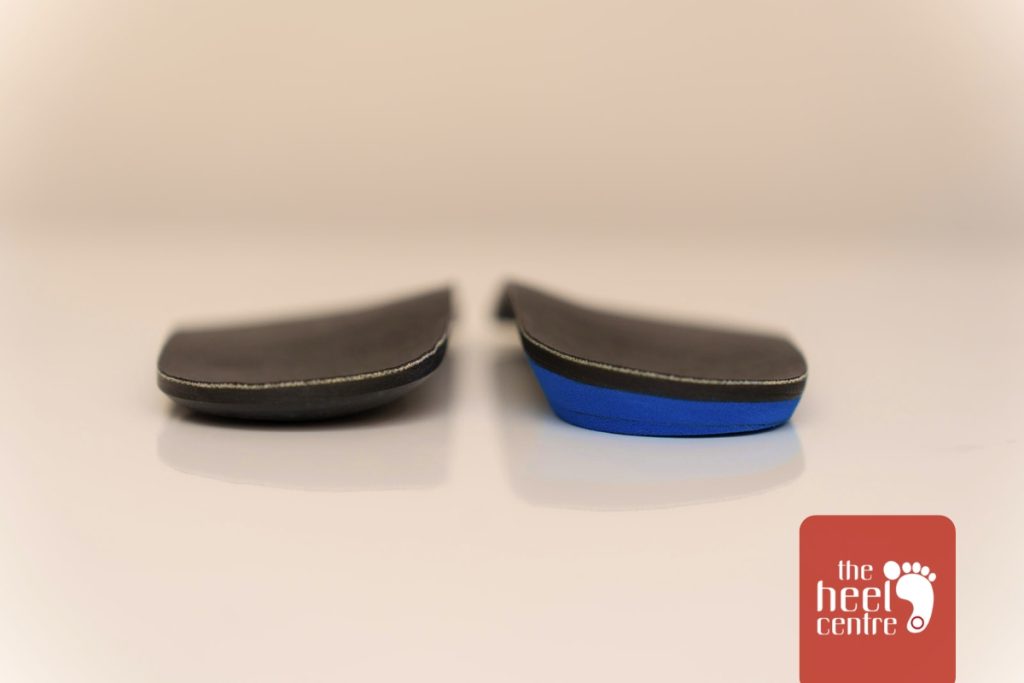
Prefabricated orthotics (sometimes called off-the-shelf or medical-grade ready-made orthotics) come in set sizes and shapes. A podiatrist selects the right model for your foot, then modifies it if needed with heel lifts, metatarsal domes, or extra cushioning. They are a sensible starting point for straightforward cases and for people who want a shorter lead time.
A common question patients ask is whether a cheap insert from the supermarket is the same thing. The short answer is no. Prefabricated clinical orthotics are built to medical specifications, with controlled heel cup depth, arch profile, and material density. That consistency is what makes them reliable inside a treatment plan.
Orthotics grouped by flexibility
Beyond custom versus prefabricated, orthotics are often described by how firm or soft they are. The flexibility of the device is what decides how much correction you get versus how much cushioning.
Rigid orthotics
Rigid orthotics are made from firm materials such as polypropylene, carbon fibre, or graphite. They are designed to control motion at the back and middle of the foot, which is useful for people whose arches collapse excessively during walking or running.
Patients with flat feet causing knee pain, or office workers spending long hours on hard floors, often respond well to rigid devices. They take a few weeks to feel at home in a shoe, so we guide patients through a graded wear-in period rather than a cold start at eight hours on day one.
Semi-rigid orthotics
Semi-rigid orthotics sit in the middle. They combine a firmer shell with softer top covers or cushioning layers, so you get meaningful support alongside a gentler feel underfoot. Most of the custom orthotics we prescribe at The Heel Centre are semi-rigid, because they tend to be the best all-rounder for active adults and people who need both control and comfort.
Runners managing Achilles tendinopathy, walkers with mild overpronation, and anyone standing on their feet for a twelve-hour shift often land in this category.
Soft or accommodative orthotics
Soft orthotics focus on cushioning and offloading rather than correcting foot position. They are typically made from EVA foams, cork composites, or closed-cell rubbers that absorb shock and redistribute pressure. For patients living with diabetes, arthritis, or very bony heels, accommodative devices protect vulnerable skin and joints without forcing the foot into a new position.
Orthotics grouped by purpose or activity
Sports and running orthotics
Running loads the foot with two to three times body weight with every step. Sports orthotics are narrower through the forefoot so they fit inside running shoes without bunching, and the materials are chosen for durability and energy return. Court sports, cycling, and AFL boots each have their own quirks, which is why we ask about the shoe you actually wear before finalising a prescription. A gait analysis in the clinic is often where the most useful detail comes out.
Dress orthotics
If you wear low-profile shoes, loafers, or court shoes for work, a standard orthotic may simply not fit. Dress orthotics are thinner and cut narrower so they slide into shallow footwear. They deliver less correction than a full-length sports orthotic, so we often use them as a second pair rather than a replacement.
Children’s orthotics
Growing feet are not small adult feet. Children referred with severe flat feet, persistent heel pain, toe walking, or knock-knees sometimes benefit from a short stretch of orthotic use while their muscles and coordination catch up. The device is rarely prescribed alone. It forms one part of a broader plan that usually involves strengthening, footwear advice, and careful monitoring as the child grows.
Diabetic and high-risk foot orthotics
For patients with diabetes, peripheral neuropathy, or a history of ulceration, orthotics shift focus from correction to protection. The priority is reducing peak pressure and shear on vulnerable areas. These devices are softer, often paired with custom footwear, and reviewed more frequently because the materials compress with use.
How a podiatrist decides which orthotic suits your feet
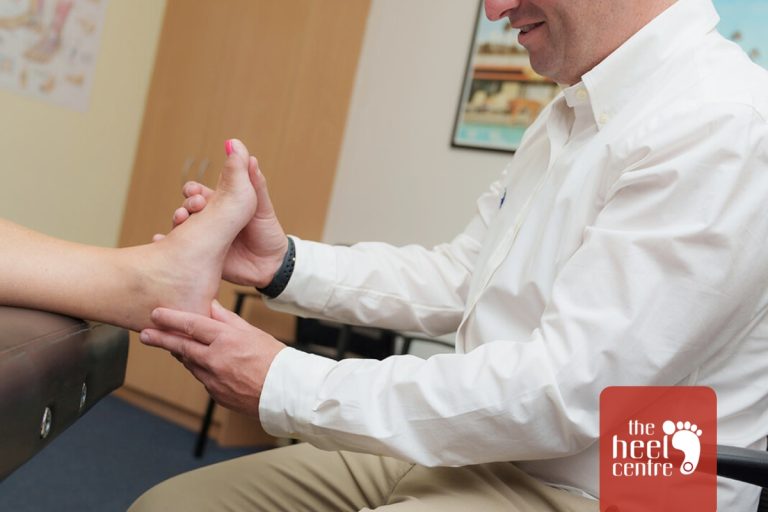
Prescribing an orthotic is not about matching your foot shape to a catalogue. A thorough assessment looks at how you stand, how you walk, what your joints actually allow, and what is going on further up the chain at your knees, hips, and back. We also look at your footwear, your training load, your job, and what you want to get back to doing.
The combination of findings from a physical exam, video gait analysis, and where relevant a diagnostic ultrasound decides whether a custom device, a prefabricated device, or something else entirely is the right next step. Sometimes the answer is footwear changes and a loading program first, with orthotics held in reserve.
When orthotics are not the right answer
Orthotics are a helpful tool in the right situation, but they are not a universal fix for foot pain. If your pain comes from a stress reaction in the bone, a systemic inflammatory condition, a nerve entrapment, or a muscular strength deficit, a piece of plastic inside your shoe will not solve the underlying issue.
We also see patients who have been wearing the wrong device for years, or who were never reassessed as their feet and activities changed. If an orthotic is not giving you relief within six to eight weeks, that is a signal to return to your podiatrist, not to push on and hope. More targeted care, including heel pain treatment options such as shockwave therapy or prolotherapy, may be a better fit.
Types of Orthotics: Your Questions Answered
| QuestionS | AnswerS |
|---|---|
| What are the main types of orthotics? | The main types of orthotics fall into two groups based on how they are made — custom and prefabricated — and three groups based on flexibility: rigid, semi-rigid, and soft (accommodative). Purpose-built categories such as sports, dress, children’s, and diabetic orthotics also exist to suit particular activities and foot health needs. |
| Are custom orthotics better than prefabricated orthotics? | Custom orthotics are built specifically for your feet using a biomechanical assessment and 3D scanning, which makes them suitable for complex or ongoing foot problems. Prefabricated orthotics work well for straightforward cases and shorter lead times. A podiatrist assessment helps decide which option fits your situation. |
| How do I know if I need rigid, semi-rigid, or soft orthotics? | Rigid orthotics control motion and suit flexible flat feet or strong overpronation. Semi-rigid orthotics balance support with comfort and suit most active adults. Soft, accommodative orthotics focus on cushioning and offloading, which suits arthritis, diabetes, or very bony, sensitive feet. A podiatrist assessment identifies the right category for you. |
| Do orthotics help with plantar fasciitis? | Orthotics can help reduce the load on the plantar fascia by supporting the arch and cushioning the heel. They work best as part of a broader plantar fasciitis plan that may include stretching, footwear changes, and treatments such as shockwave therapy. A podiatrist assessment at The Heel Centre can confirm whether orthotics are the right fit for your case. |
| How long do orthotics take to work? | Most patients notice meaningful improvement within four to eight weeks of wearing their orthotics during a graded wear-in period. If you are not feeling any benefit by the six to eight week mark, book a review with your podiatrist. The prescription, footwear, or loading program may need adjusting. |
| Can I wear orthotics in any shoe? | Full-length orthotics fit most lace-up shoes, runners, boots, and work shoes. They do not fit comfortably in thin dress shoes, sandals, or ballet flats. For low-profile footwear, dress orthotics or three-quarter length devices give you some support without crowding the shoe. Your podiatrist can prescribe a second pair if you need both options. |
Final thoughts
The different types of orthotics exist because feet are not all built the same, and neither are the jobs we ask them to do. Custom and prefabricated devices each have their place. Rigid, semi-rigid, and soft materials each solve different problems. The value of seeing a podiatrist is not the orthotic itself. It is the reasoning behind the prescription, the wear-in plan, and the follow-up that checks the device is doing what it should.
If foot, heel, knee, hip, or lower back pain is getting in the way, book an assessment with our team at The Heel Centre in Ringwood East, Frankston, or Caulfield North.
We will work out what is driving the pain, whether orthotics are part of the answer, and which type fits your feet and your lifestyle. Book your appointment online or call your nearest clinic.
Compliance note
Educational content only. No outcome promises, diagnostic claims, or comparative provider claims. Recommendations are framed around assessment and individual prescription.