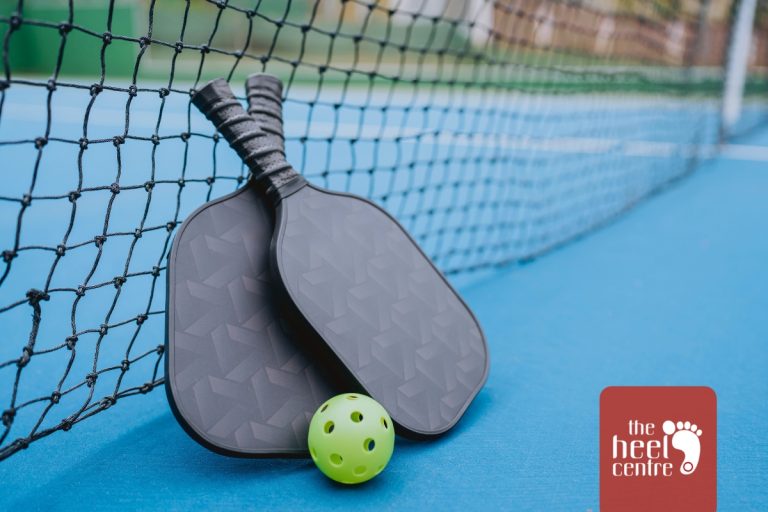
Pickleball has quickly become one of the most popular ways to stay active. The fast pace, quick direction changes, and social atmosphere make it appealing to players of all ages and fitness levels. But like many court sports, the sudden stops, starts, and bursts of movement can place significant stress on the feet.
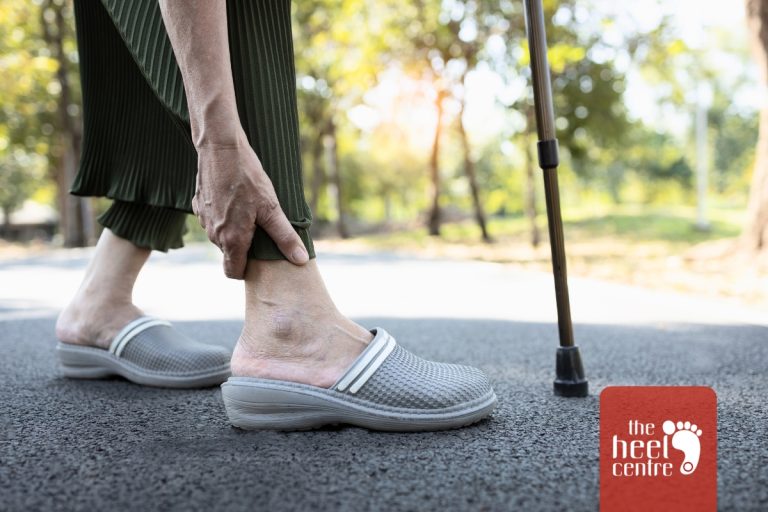
For some players, that stress shows up as a sharp or aching pain in the heel, especially during the first steps in the morning or after time off the court. This discomfort is often linked to plantar fasciitis, a condition involving irritation of the thick band of tissue that supports the arch of the foot.
Understanding why this condition develops can help players stay active while protecting their feet. With the right attention to footwear, movement habits, and recovery, many people can continue enjoying the game while reducing the strain that leads to persistent heel pain.
Why does pickleball hit your heels?
Pickleball emphasises lateral movements, quick directional changes, and frequent push-offs. This repetitive loading can irritate the plantar fascia, the thick band of tissue along the bottom of the foot.
Pickleball is uniquely tough on the plantar fascia for three main reasons:
- The hard court: Unlike grass or clay, asphalt and concrete have zero give, sending the impact force directly into your arch.
- The shuffle: Constant side-to-side movements (lateral loading) put uneven pressure on the fascia.
- The quick start: Exploding forward for a dink or back for an overhead lob creates a sudden high-tension stretch on the heel.
Who’s at risk?
Beginners who jump into long sessions without proper footwear, an adequate warm-up, or a gradual progression in volume are especially susceptible. People with flat feet or high arches may also have altered stress on the fascia during play.
Common symptoms of plantar fasciitis in pickleball players
- The first step stab: A sharp, stabbing pain in the bottom of the heel or arch when you first get out of bed in the morning or stand up after sitting for a long time.
- Post-game throb: Usually, the pain actually decreases while you’re playing because the tissue warms up. However, the inflammation typically flares up intensely after you finish the match or the next morning.
- Tenderness to touch: If you press firmly on the inner side of your heel bone (the calcaneus), it will feel bruised or hypersensitive.
- Stiffness: A feeling of tightness in the arch that makes it difficult to flex your toes upward towards your shin.
Plantar fasciitis management and prevention for pickleball players
1. The right footwear (non-negotiable)
Stop playing in running shoes. Running shoes are designed for forward motion and have high stacks that can cause ankle rolls. You need court shoes (tennis or pickleball-specific) that offer the following:
- Lateral stability to prevent the foot from collapsing.
- Firmer arch support.
- Reinforced heel counters.
2. The pre-game ritual
Never walk onto the court cold. Try these for 5 minutes before your first serve:
- Calf stretches: Tight calves pull on the heel, which pulls on the fascia. Stretch them against the court fence.
- Toe curls: Sit on the bench and try to scrunch a towel with your toes to wake up the foot muscles.
- Dynamic warm-up: Low-intensity side shuffles to get the blood flowing.
3. Gradual progression
Increase play time and intensity gradually to allow the plantar fascia to adapt. Include rest days and cross-training to avoid overloading the same tissue.
4. Immediate post-game recovery
- The frozen water bottle: Roll your foot over a frozen plastic water bottle for 10 minutes. This provides a massage and cryotherapy (icing) simultaneously.
- Night splints: If the morning pain is brutal, a night splint keeps your foot in a flexed position while you sleep so the fascia doesn’t tighten up overnight.
When to see a podiatrist
If the pain is changing your gait or persists even after you’ve warmed up, it’s time to see a podiatrist. A podiatry evaluation is advisable to tailor treatment and prevention strategies.
If heel pain is persistent, worsening, or limits daily activities, a podiatrist can help diagnose plantar fasciitis and rule out other heel pain conditions.
We might suggest:
- Custom orthotics: To fix biomechanical issues like overpronation.
- Shockwave therapy: To stimulate healing in chronic cases.
- Physical therapy: To strengthen the posterior chain (glutes and hamstrings) so your feet don’t take all the weight.
If you play through sharp, tearing pain, you risk a plantar rupture, which will keep you off the court for months rather than weeks. Listen to the ache before it becomes a scream.
Frequently Asked Questions About Pickleball Heel Pain and Plantar Fasciitis
| Question | Answer |
|---|---|
| Can I keep playing pickleball if I have plantar fasciitis? | Mild cases may allow modified play with proper footwear and reduced session length. But if you’re feeling sharp heel pain during or after a game, continuing without treatment risks making it chronic. A podiatrist can assess whether it’s safe to stay on court and what adjustments to make. |
| What does pickleball heel pain actually feel like? | A stabbing or aching pain at the base of the heel — worst with your first steps in the morning or after sitting courtside. It often eases once you get moving, then returns after a long session. That pattern is a strong indicator of plantar fasciitis rather than general foot soreness. |
| How long does pickleball plantar fasciitis take to heal? | With the right management, most people see improvement within 6 to 12 weeks. Chronic cases — where people have played through the pain for months — take longer. Shockwave therapy can significantly speed up recovery for stubborn cases that haven’t responded to rest and stretching. |
| What’s the best treatment for plantar fasciitis caused by pickleball? | Plantar fasciitis management starts with addressing the load — footwear assessment, custom orthotics, calf stretching, and reducing play volume. For persistent pain, shockwave therapy is a clinically supported option that promotes healing without surgery or injections. A podiatrist will identify the root cause and build a plan that gets you back on court long-term. |
Final thoughts
Pickleball is one of the best ways to stay active, but only if your body can keep up. Protecting your feet from the start is what keeps you on the court long term.
Wearing the right court shoes, warming up properly, and building your play volume gradually are all key steps to reducing the risk of plantar fasciitis. If you’re already experiencing heel pain after a game, don’t ignore it. Early management can significantly reduce recovery time.
Playing through heel pain doesn’t make it go away, it makes it chronic. If pickleball is aggravating your plantar fasciitis, the sooner you get it assessed, the faster you’ll be back on court. Book an appointment with The Heel Centre today at our Ringwood, Frankston or Caulfield clinics.