That first step out of bed in the morning tells you everything. If your heel hits the floor and a sharp jolt shoots up through your arch, there’s a good chance your feet are trying to flag something. For active people and athletes, heel pain is one of the most common reasons training gets interrupted, whether it’s a runner pushing into higher mileage, a footballer making repetitive cuts, or a weekend netballer who’s been ignoring a dull ache for too long.
Understanding the causes of heel pain is the first step toward getting back to full activity. Different structures in the heel respond to different loads, so the cause matters just as much as the treatment.
What causes heel pain in active people?
1. Plantar Fasciitis
Plantar fasciitis is the most frequently seen cause of heel pain, particularly in runners, cyclists, and court sport athletes. The plantar fascia is a thick band of tissue running from the heel bone (calcaneus) to the toes, supporting the arch during weight-bearing. When this tissue is repeatedly stressed, microtears can develop at the attachment point near the heel, producing localised inflammation.
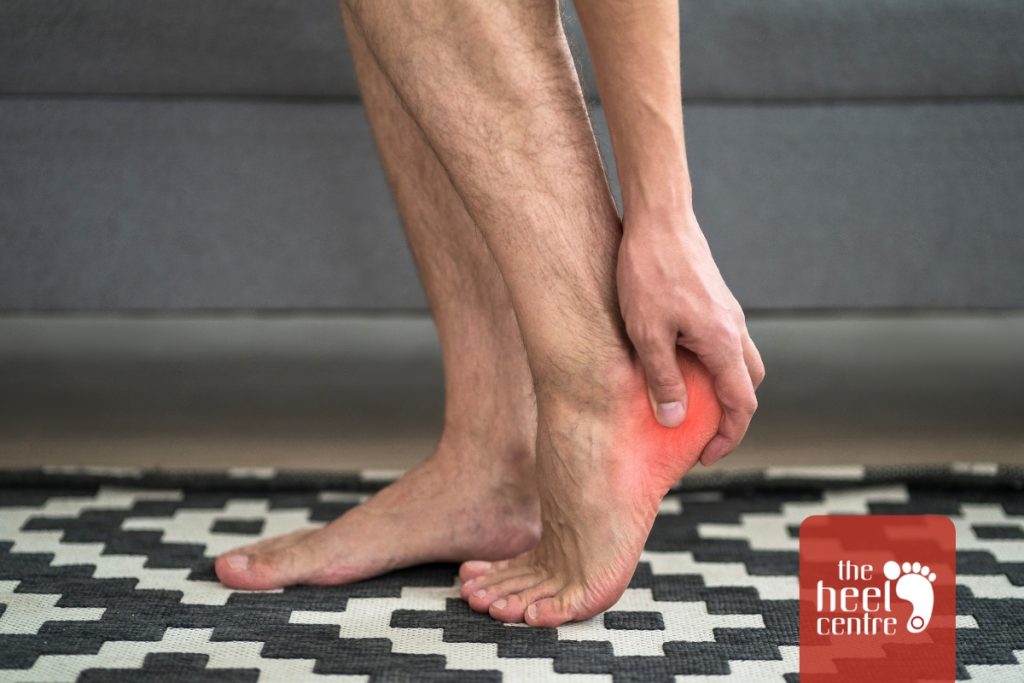
The hallmark symptom is sharp pain on the underside of the heel when you first put weight on your foot in the morning or after sitting for a prolonged period. It often eases after a few minutes of walking, then returns after sustained activity. Tight calf muscles, high training volumes, and footwear with insufficient arch support are common contributing factors.
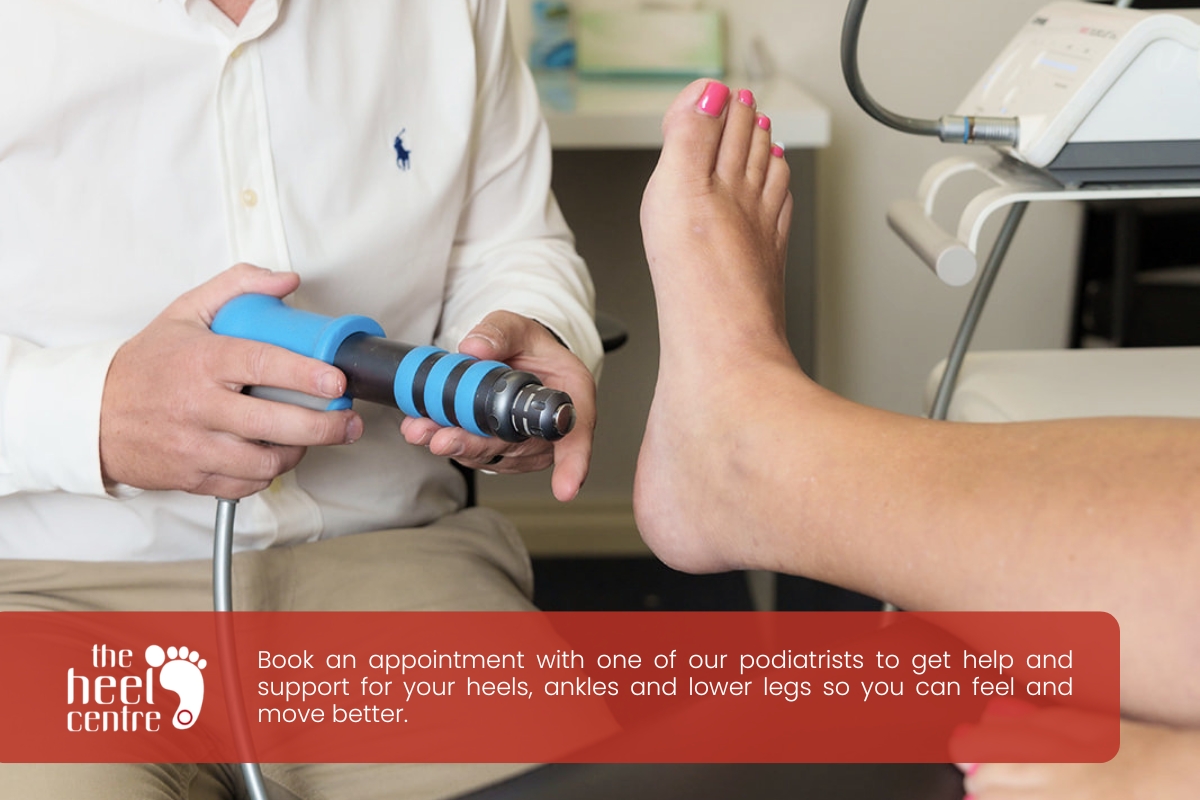
Treatment options for plantar fasciitis can include load management, targeted stretching, orthotic therapy, and shockwave therapy for cases that do not respond to initial care.
2. Achilles Tendinopathy
The Achilles tendon connects the calf muscles to the back of the heel bone. In active individuals, repetitive loading, particularly when training intensity or volume increases quickly, can cause the tendon to degrade rather than adapt. This process is called Achilles tendinopathy and is characterised by pain and stiffness at the back of the heel, often worst first thing in the morning or at the start of a session.
Unlike a tendon tear, tendinopathy does not necessarily involve structural damage but reflects a failed healing response within the tendon. It’s common in runners, football players, and anyone whose sport involves substantial push-off forces. Loading programmes that progressively build tendon tolerance form the foundation of management.
3. Heel Spurs
Heel spurs are bony growths that form on the underside or back of the calcaneus, typically in response to chronic traction from the plantar fascia or Achilles tendon. Many people have heel spurs without any pain at all. When pain does occur, it is usually related to the surrounding soft tissue rather than the bony growth itself.
For athletes, heel spurs are often found alongside plantar fasciitis or Achilles tendinopathy. Treating the underlying tendon or fascial load tends to resolve the pain, even when the spur remains visible on imaging.
4. Bursitis
Small fluid-filled sacs called bursae sit around the heel to cushion tendons and bones from friction. When a bursa becomes irritated, usually from repetitive pressure or poorly fitted footwear, it swells and causes localised pain. Retrocalcaneal bursitis (behind the heel) and subcalcaneal bursitis (beneath the heel) are both seen in athletes across multiple sports.
A podiatrist can identify bursitis through clinical assessment and diagnostic ultrasound, and distinguish it from tendinopathy, which calls for a different treatment approach.
5. Stress Fractures
Less common but worth knowing about, heel stress fractures can develop in athletes who have rapidly increased their training load. The calcaneus is the most frequently affected bone in lower limb stress fractures. Pain tends to be diffuse and worsens with activity rather than easing into it. Accurate diagnosis requires imaging, and management typically involves a period of protected weight-bearing.
Heel Pain in Athletes: Your Questions Answered
| Question | Answer |
|---|---|
| What are the most common causes of heel pain in athletes? | The most common causes of heel pain in active people include plantar fasciitis, Achilles tendinopathy, heel spurs, and bursitis. Each condition affects a different structure around the heel and typically develops from repetitive loading, poor footwear choices, or rapid increases in training volume. |
| How can I tell if my heel pain is plantar fasciitis? | Plantar fasciitis is commonly characterised by sharp pain on the underside of the heel when taking your first steps in the morning or after periods of rest. The pain often eases after a few minutes of walking. A podiatrist can confirm the diagnosis through clinical assessment and diagnostic ultrasound. |
| Can sports podiatry help with heel pain from running or sport? | Yes. Sports podiatry addresses the biomechanical and load-related factors that contribute to heel pain in active people. Assessment typically includes gait analysis and diagnostic ultrasound, with treatment options including orthotic therapy, shockwave therapy, and structured loading programmes tailored to your sport. |
| What foot care tips help prevent heel pain for athletes? | Key preventive measures include wearing sport-appropriate footwear and replacing it regularly, building calf and foot strength through exercises like calf raises and short-foot drills, and managing training load by avoiding sudden spikes in mileage or intensity that exceed what the tissue can adapt to. |
| When should I see a podiatrist for heel pain? | If heel pain persists beyond 48 hours of rest, or returns consistently during or after training, a podiatrist assessment is recommended. Early assessment helps identify the underlying cause before the condition progresses and affects training capacity. |
Foot care tips for athletes to prevent heel pain
Prevention comes down to practical habits that are easy to overlook when training is going well.
- Footwear matters more than most athletes appreciate. Shoes should match your foot type, your sport, and your training volume. A shoe that works for a 5km run may not support a 20km training week. Regular replacement is important too, as midsole cushioning degrades well before the outer sole shows visible wear.
- Calf and foot strength are also key. Tight or weak calves place excess load on the plantar fascia and Achilles tendon. A regular calf raise programme, including both straight-knee and bent-knee variations, builds the capacity to absorb impact. The intrinsic muscles of the foot respond well to short-foot exercises and toe strengthening work.
- Managing training load is the other major factor. Most overuse injuries, including the majority of causes of heel pain, develop when volume or intensity increases faster than the tissue can adapt. Gradual progression gives the heel structures time to strengthen and reduces the risk of breakdown.
How sports podiatry can help
Many athletes put off getting their heels assessed because the pain comes and goes. The issue is that intermittent pain often reflects tissue that’s managing at its current load but has no capacity to absorb further demand. By the time the pain becomes constant, the problem is usually further progressed.
Sports podiatry at The Heel Centre includes a thorough clinical assessment, diagnostic ultrasound where indicated, and video gait analysis to identify biomechanical factors contributing to your heel pain. Treatment is built around your sport, your schedule, and what you need to get back to.
Final thoughts
Heel pain in active people is rarely one thing. Plantar fasciitis, Achilles tendinopathy, heel spurs, and bursitis each have different mechanisms and different recovery timelines. Getting an accurate picture of what is happening in the heel is what allows treatment to be targeted rather than general.
If heel pain has been limiting your training or creeping into everyday activity, getting it properly assessed is the most direct path back to full function.
Book an appointment with The Heel Centre to get a thorough assessment and a personalised treatment plan so you can get back to doing what you love.